

 한국어
한국어 සිංහල
සිංහල Ελληνικά
 Français
 বাংলা
বাংলা O'zbek
 नेपाली
 سنڌي
سنڌي پښتو
پښتو Български
 简体中文
简体中文Are Press-on Nails Better for Your Nails?
Oct 21, 2024
Leave a message
Introduction
In the area of fashion, manicures are a subtle way for enthusiasts to match their outfits and express themselves. Nowadays, we have more nail types, such as Classic Salon Manicures, Dip Powder Nails and press-on nails.
Many people claim that press-on nails are the best nail care method. Because they offer different shape, length, or color options and are not as prone to falling off as traditional manicures. So, today let's explore this question together: are press-on nails better for your nails?
Common Nail Types
Now, we will introduce the main types of nails and analyze them in comparison with press-on nails.
1. Traditional Salon Nails
In a salon, a professional nail technician will shape your nails, trim the cuticles, and apply various nail products. These include:
(1) Classic Manicures: Classic nail polish comes in a variety of colors and finishes. They can quickly change the appearance of your nails, but they are easily scratched by the outside world. Therefore, frequent touch-ups are required and they can only last for about a week. In addition, the materials may contain some harmful chemicals such as formaldehyde and toluene, so they are not suitable for long-term use.
(2) Gel Nails: Hard gel is a nail enhancer similar to acrylic nails, except that it is cured under ultraviolet or LED light. You can use it to extend the length of your nails. It can be carved and shaped like acrylic and lasts for 2 to 4 weeks. However, when removing this type of nail, it needs to be soaked in acetone, and your nails will become dry.


2. Dip Powder Nails
This method involves dipping the nails into powder that adheres to a base coat and is then sealed with a top coat. Then, the nail technician will place your hand under a dryer for a total of one and a half hours. These nails are resistant to wear, chipping, and breaking and can last for about 4 weeks, but the removal process is harsh.
3. Press-On Nails
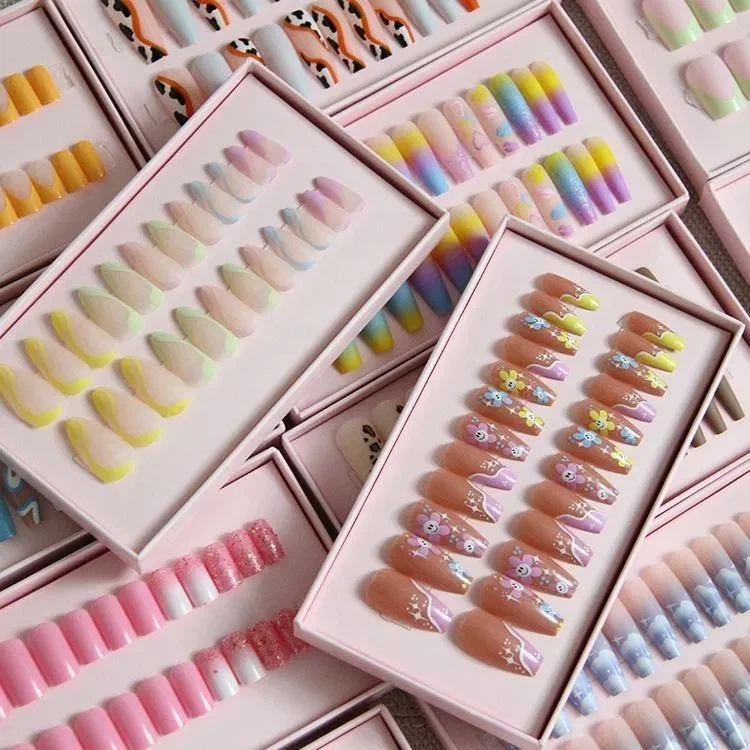
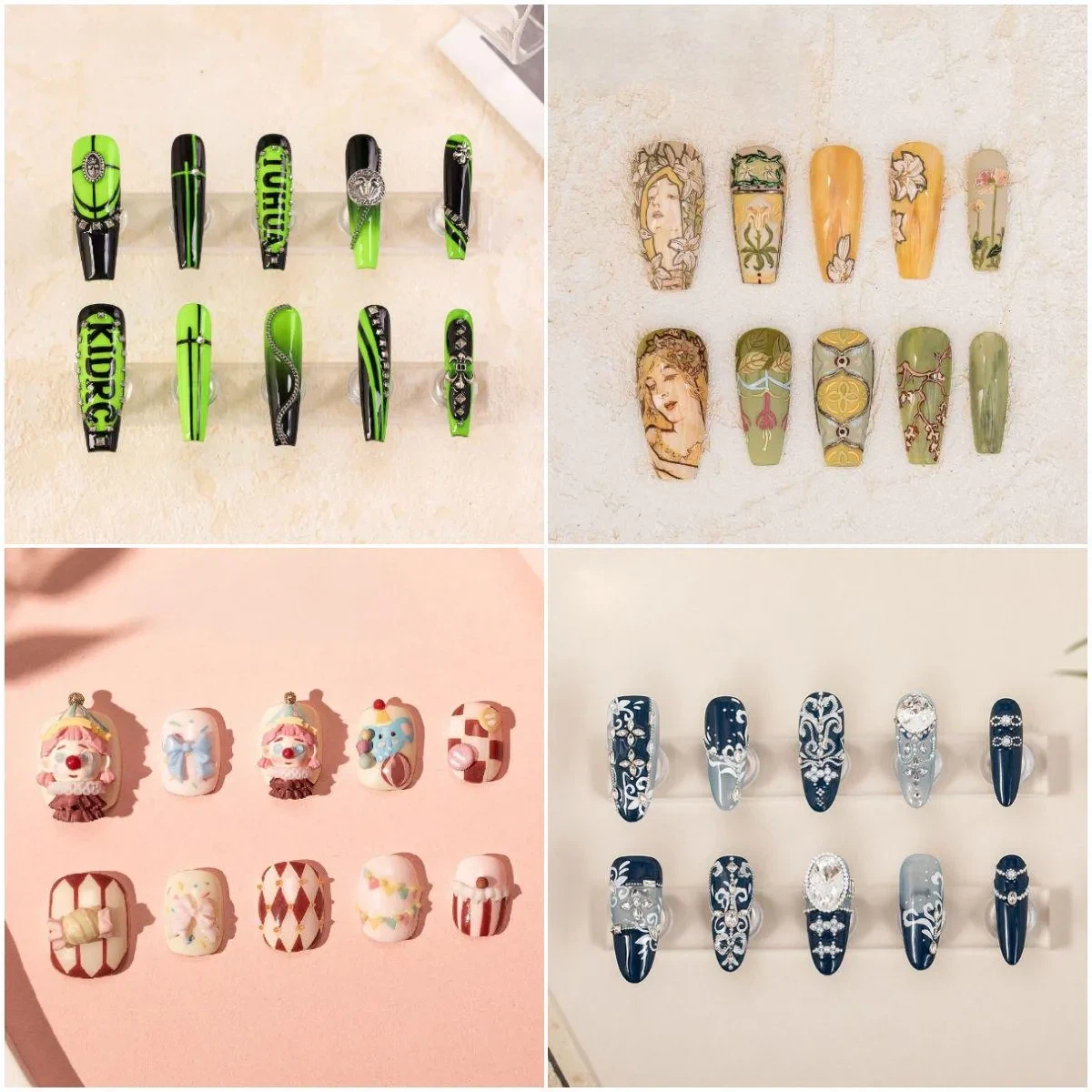
Press-on nails are pre-made nails according to your own needs and sizes. Their main material is generally acrylic and can be made into different shapes and thicknesses. These nails are worn on your own nails with special glue and can be removed when not in use or the style can be changed in a few minutes.

Why are Press-on Nails More Friendly?
Press-on nails are considered more friendly to natural nails for the following main reasons:
Avoid Excessive Grinding
In traditional salon manicures, in order to make nail polish adhere better to the nails, manicurists generally grind the natural nails a lot. This removes the cuticle on the nail surface, may make the nails thinner and more fragile, and even leading to layering. In contrast, for press-on nails, only a slight grinding of the natural nails is needed to remove the uneven part.
Reduce Exposure to Chemicals
Materials used in traditional manicures often contain some chemical substances, such as formaldehyde and dibutyl phthalate. These substances can irritate the nails and surrounding skin and cause allergic reactions. Press-on nails are generally made of environmentally friendly materials such as acrylic esters and ABS plastics, and relatively speaking, they contain less chemical substances.
Allow Nails to Rest Freely
Press-on nails can be removed at any time according to personal needs, such as when swimming. This gives the nails time to breathe and recover, and they are not covered by nail polish or nail glue for a long time. While traditional manicures are firmly attached to your nails and cannot be removed immediately.
Less Pressure on Nails
Manicurists for gel nails may use some tools to shape and strengthen the nails, such as using nail tips to extend the nails. If not operated properly, it may cause the nails to deform or be damaged. Press-on nails are relatively thin and light and are attached to your nails through mild adhesives, so your nails will not feel pressed.
Correct Usage of Press-on Nails

How to Wear
(1) Prepare press-on nails: File and slightly polish your natural nails to create a clean and flat surface.
(2) Clean the nails: Use nail degreaser or alcohol wipes to remove any oil or residue on the nails.
(3) Apply nail glue or adhesive: Apply them to the back of the press-on nails, noting that only a thin and even layer is needed.
(4) Wear press-on nails: Place them on your natural nails, starting from the cuticle and pressing firmly down to the tip.
(5) Fix the nails: Hold the pressing device for 30 seconds to a minute to allow the glue to adhere completely.
How to Remove
(1) All you need is a small basin of warm water with a few sprays of body wash added.
(2) Soak your fingers in the solution for a few minutes. After the glue between the press-on nails and the natural nails softens, remove the press-on nails.
(3) If the press-on nails still cannot be removed easily, don't worry. Gently pry off the false nails with the wooden stick we prepared for you or apply some cuticle oil.
(4) Carefully remove the residue on the false nails with a wooden stick and store them in a dry box for wearing again.

Conclusion
Well, now we understand why press-on nails are so popular. For those who seek diverse nail art styles but also pay attention to nail health, it is indeed a good choice. In addition, if you are interested in them but don't know the shape well, our article "What are the Types of Press on Nails" may be able to help you make a choice.