

 한국어
한국어 සිංහල
සිංහල Ελληνικά
 Français
 বাংলা
বাংলা O'zbek
 नेपाली
 سنڌي
سنڌي پښتو
پښتو Български
 简体中文
简体中文How Are Press On Nails Made and What Are They Made Of?
Apr 17, 2025
Leave a message
According to Grand View Research, the global nail art market is projected to reach $1075 million by 2030, with press on nails emerging as the fastest-growing category due to their convenience. Press on nails have many advantages, such as no time-consuming, little damage, and can be reused, so they will gradually replace traditional manicures. But how are Press On Nails produced? This article explores their material composition, comparisons of different materials, and the manufacturing process.
What Are Press On Nails Made Of?
Press On Nails are primarily made from plastic. Plastic is lightweight, cost-effective, and easy to mold into nail-shaped forms, enabling rapid production and suitability for daily wear. Its flexibility reduces breakage risks, and its hardness can be adjusted through formula modifications. Plastic surfaces also allow for printed patterns or attached decorations. Common types include ABS plastic, acrylic (PMMA), PETG, and eco-friendly plant-based plastics like PLA.
Differences Between Materials
|
Material Type |
Advantages |
Disadvantages |
Use Cases |
|
ABS Plastic |
Lightweight, low cost, mass-production friendly |
Prone to cracking, low breathability |
Short-term daily wear |
|
Polymethyl Methacrylate (PMMA) |
High transparency, durable, polishable |
Heavy, requires solvent for removal, average breathability |
Long-term wear |
|
Gel Material |
Flexible fit, glossy finish, customizable |
UV curing required, high cost, complex removal |
High-end market |
|
Polylactic Acid (PLA) |
Biodegradable, eco-friendly, hypoallergenic |
Poor durability, humidity-sensitive, high cost |
Limited adoption |
|
Other Plant-based Plastics (e.g., cellulose, soy resin) |
Renewable, eco-friendly |
Immature technology, limited designs |
Rare in mainstream markets |
Production Process of Press On Nails

1. Design Nail Shapes and Patterns
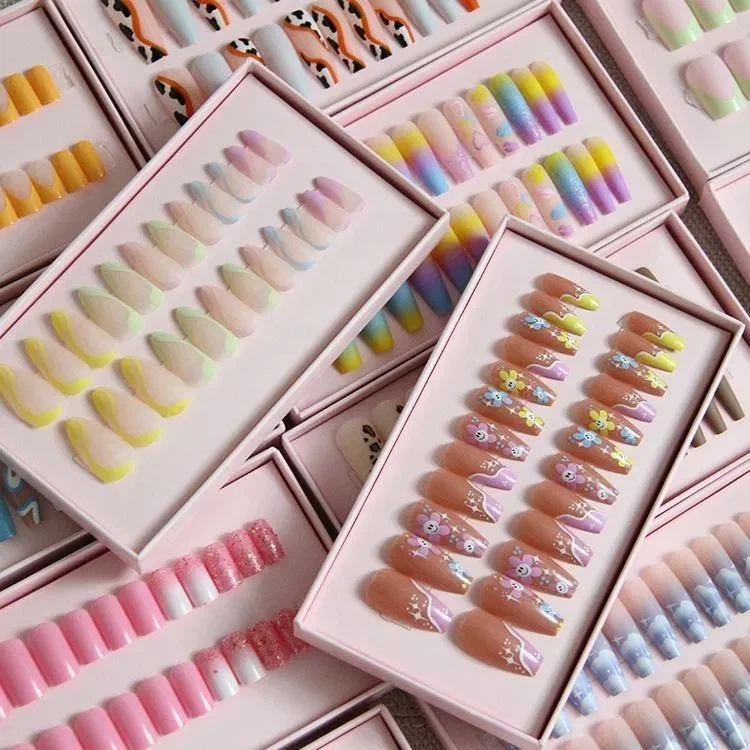
Nail shapes (e.g., almond, square, oval) and patterns (solid colors, gradients, cat-eye effects) are designed based on client requirements. The designer will print the model through 3D printing to ensure that it fits the real person's nails.
2. Mold Creation
The next step is to transform the designed model into a physical mold. Common methods are 3D printing and metal injection molds. The size and curvature of the groove in the mold determine the final shape of the press on nails.


3. Material Preparation and Molding
Plastic pellets are melted at high temperatures, injected into molds, and cooled to form Press On Nails. The finished nails are 0.3-0.7 millimeters thick, ensuring lightweight and secure wear.
4. Surface Decoration
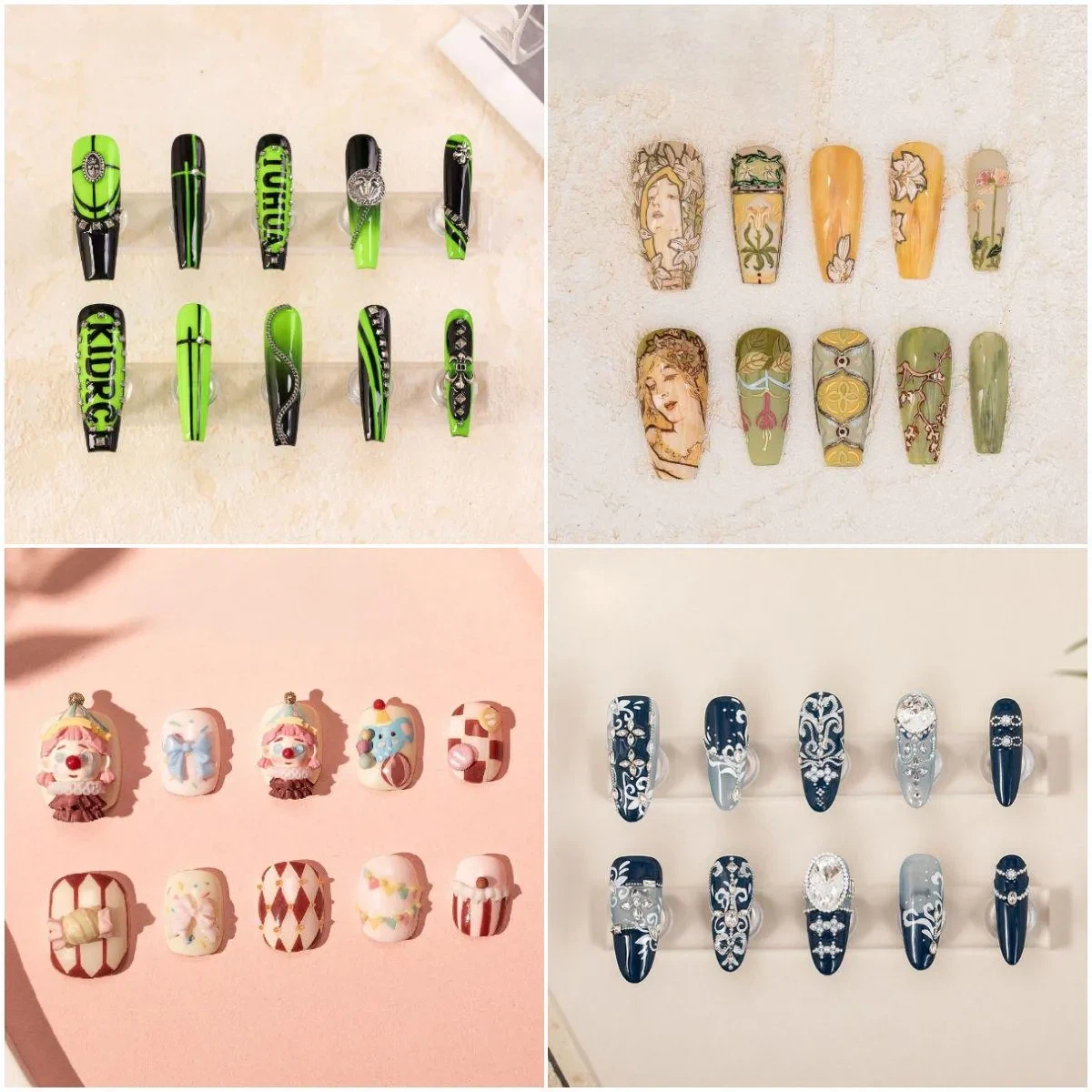
The nail tips are decorated by machine printing or hand-applying diamonds or sequins, etc. A protective layer is then applied to ensure that the decoration does not fall off and to increase the gloss.


5. Quality Inspection and Finishing
Defective nails (with bubbles, uneven edges, or loose decorations) are discarded. Polish the edges of the inspected manicure to ensure that it does not scratch the hands and the edges are neat.
6. Packaging
Products are double-packaged: inner packaging uses OPP bags or acrylic boxes, while outer packaging uses corrugated boxes to prevent damage during shipping.

Conclusion
This article details the materials and production processes of Press On Nails. Use this guide to select the most suitable material for your needs.
DH Nails: Wholesale and Custom Press on Nails for Your Bussiness
As a handmade nail art supplier, DH Nails can provide wholesale services for your business. We will also match the most suitable press on nails material for you according to the style you choose. If you have any favorite style, please contact us as soon as possible!